
Super Lode Runner
Descripción
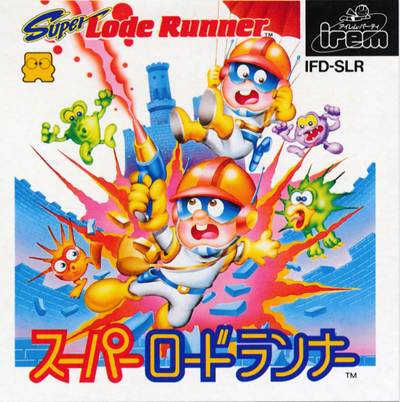
Douglas e. Smith's lode runner was introduced to japan in 1983 on various popular japanese home computer platforms, including the msx, sharp x1, and nec pc family computers. Hudson soft licensed the rights to bring the game to nintendo's famicom, and it was released in 1984 as one of the first 3rd party games ever made for the system and it was an incredible hit. Around the same time, irem licensed the rights to produce an arcade version of lode runner which they also released in 1984, along with three other sequels through 1986. These arcade versions made a few tweaks to the original game play, and the final arcade game introduced a two player cooperative mode. In 1987, irem decided to package a number of select stages from all four of the arcade games into one title, and released it in disk format for the famicom disk system, entitled super lode runner. Though the graphics were not quite as good as the arcade games, they were close, and irem brought many of the game play changes to famicom players, including the new two player mode. Irem released a sequel later on that same year. A different version of the game was released for the msx with the same title.
Douglas e. Smith's lode runner was introduced to japan in 1983 on various popular japanese home computer platforms, including the msx, sharp x1, and nec pc family computers. Hudson soft licensed the rights to bring the game to nintendo's famicom, and it was released in 1984 as one of the first 3rd party games ever made for the system and it was an incredible hit. Around the same time, irem licensed the rights to produce an arcade version of lode runner which they also released in 1984, along with three other sequels through 1986. These arcade versions made a few tweaks to the original game play, and the final arcade game introduced a two player cooperative mode. In 1987, irem decided to package a number of select stages from all four of the arcade games into one title, and released it in disk format for the famicom disk system, entitled super lode runner. Though the graphics were not quite as good as the arcade games, they were close, and irem brought many of the game play changes to famicom players, including the new two player mode. Irem released a sequel later on that same year. A different version of the game was released for the msx with the same title.
Douglas e. Le Lode Runner de Smith a été introduit au Japon en 1983 sur diverses plates-formes informatiques japonaises populaires, notamment les ordinateurs de la famille MSX, Sharp X1 et Nec PC. Hudson soft a obtenu les droits pour amener le jeu sur la famicom de Nintendo, et il est sorti en 1984 comme l'un des premiers jeux tiers jamais créés pour le système et ce fut un succès incroyable. À peu près à la même époque, irem a obtenu les droits pour produire une version arcade de Lode Runner qu'ils ont également publiée en 1984, ainsi que trois autres suites jusqu'en 1986. Ces versions arcade ont apporté quelques modifications au jeu original, et le jeu d'arcade final a introduit un mode coopératif à deux joueurs. En 1987, irem a décidé de regrouper un certain nombre d'étapes sélectionnées des quatre jeux d'arcade en un seul titre et l'a publié au format disque pour le système de disque famicom, intitulé Super Lode Runner. Même si les graphismes n'étaient pas aussi bons que ceux des jeux d'arcade, ils étaient proches, et irem a apporté de nombreux changements de jeu aux joueurs de la famicom, y compris le nouveau mode à deux joueurs. Irem a sorti une suite plus tard la même année. Une version différente du jeu est sortie pour le msx avec le même titre.
Douglas e. Il lode runner di Smith è stato introdotto in Giappone nel 1983 su varie popolari piattaforme di computer domestici giapponesi, inclusi i computer della famiglia msx, sharp x1 e nec PC. Hudson Soft ha concesso in licenza i diritti per portare il gioco su Famicom di Nintendo, ed è stato rilasciato nel 1984 come uno dei primi giochi di terze parti mai realizzati per il sistema ed è stato un successo incredibile. Più o meno nello stesso periodo, irem ottenne in licenza i diritti per produrre una versione arcade di lode runner che pubblicò anche nel 1984, insieme ad altri tre sequel fino al 1986. Queste versioni arcade apportarono alcune modifiche al gioco originale e il gioco arcade finale introdusse una modalità cooperativa a due giocatori. Nel 1987, irem decise di raggruppare una serie di livelli selezionati da tutti e quattro i giochi arcade in un unico titolo e lo pubblicò in formato disco per il sistema famicom disk, intitolato Super Lode Runner. Sebbene la grafica non fosse buona quanto quella dei giochi arcade, erano molto simili e irem ha apportato molte modifiche al gioco ai giocatori di Famicom, inclusa la nuova modalità a due giocatori. Irem pubblicò un seguito più tardi nello stesso anno. Una versione diversa del gioco è stata rilasciata per MSX con lo stesso titolo.
Consejos
- Accede a todos los mundos.
- Completa el nivel con A.
- La puntuación es máxima.
- La velocidad es máxima.
- La invencibilidad total.
- Pulsa Select para vidas infinitas.
Consulta los trucos y consejos completos y siempre actualizados de este juego en la app.
Descargar gratis en Google Play- Access all worlds.
- Complete the level with A.
- The score is maximum.
- The speed is maximum.
- Total invincibility.
- Press Select for infinite lives.
Consulta los trucos y consejos completos y siempre actualizados de este juego en la app.
Descargar gratis en Google Play- Accédez à tous les mondes.
- Terminez le niveau avec A.
- Le score est maximum.
- La vitesse est maximale.
- Invincibilité totale.
- Appuyez sur Select pour des vies infinies.
Consulta los trucos y consejos completos y siempre actualizados de este juego en la app.
Descargar gratis en Google Play- Accedi a tutti i mondi.
- Completa il livello con A.
- Il punteggio è massimo.
- La velocità è massima.
- Invincibilità totale.
- Premi Seleziona per vite infinite.
Consulta los trucos y consejos completos y siempre actualizados de este juego en la app.
Descargar gratis en Google Play